
Four seasons, one world
Aarkun's open world is split into four great regions — Spring, Summer, Autumn, and Winter — each held in season by an ancient Dragon Artefact. The seasons are not cosmetic. They are the world's oldest enchantment, and the reason anything in Aarkun grows or dies the way it does.
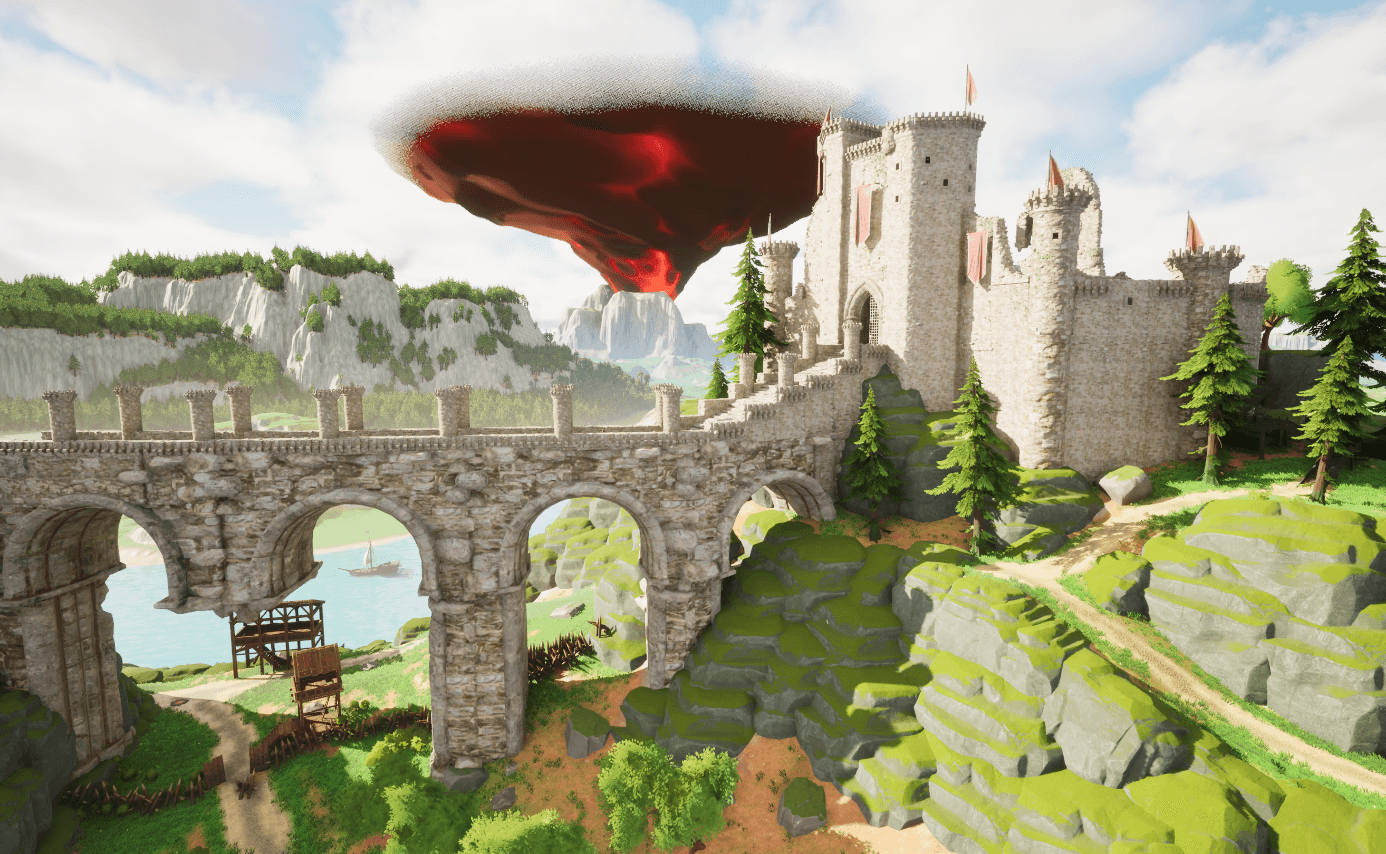
The Spring Realm — Veridale
Veridale is where Aarkun begins for most adventurers. Wide rolling grasslands, old-stone abbeys, riverside towns, and the long shadow of the Spring Dragon's artefact at the centre of it all. Veridale's climate is gentle on purpose; the faction politics are not. The Guardians hold the major cities, but every backwoods village has its own quiet opinion of them. The starter island sits off Veridale's coast.
The Summer Realm — Brassen
Brassen is sun-blasted, gold-coloured, and dry. Caravan cities, salt-flats, and a permanent haze of heat shimmer. The Bandits are strongest here — not as a single faction, but as a thousand local arrangements with the people who live in them. The Summer Dragon's artefact is rumoured to be deep beneath the Glasswastes, in a chamber no expedition has returned from intact.
The Autumn Realm — Verdross
Verdross is a long, slow burn — vast forests in permanent late-October, lake districts under a copper sky, ruined estates of pre-collapse nobility. Hunting and crafting are at their best in Verdross; so is melancholy. Several main-questline beats take place here, and the Autumn artefact is the most studied of the four — the one historians think they understand. They don't.
The Winter Realm — Hjorring
Hjorring is the late-game realm — a frozen archipelago of black stone islands, lit by aurora and storm. The cold here is supernatural; the artefact does not keep winter here, it keeps winter at all, and Hjorring is the place that proves it. The hardest content lives in Hjorring's deep dungeons, and so does the ending of the main story.
The world does not pause for you
Each realm is a living place. NPC schedules, weather systems, world events, and faction territory shift on a real clock — not a player-presence clock. A market town that's bustling at noon is asleep at three in the morning. A dungeon that has been farmed for too long has its lord replaced. The seasons themselves cycle in a long, slow rhythm that shapes which content is available where.
Why four seasons?
The seasonal split is more than a biome system. Each Dragon Artefact is one quarter of an older, broken whole — and the truth of what was broken is the engine of the main questline. The Guardians have one explanation. The Bandits have another. Both of them are wrong in different ways. You will spend the long arc of the campaign finding out the third answer, and what doing so costs.